Showing posts with label Roof rat. Show all posts

Tuesday, December 15, 2020

Pest Control - Rodent Helpful Hints


Pest Control - Rodent Helpful Hints

Pest Control Morisset

  • Some properties are invaded in autumn every year as rats and mice seek shelter in cooler weather.  Others may be invaded when nearby areas are developed.  If you are aware of a potential influx, contact your Pest Manager to introduce a programme before the event.
  • Pet food is a major attraction for rodents.  Ensure that all pet food is never left outside overnight and by storing in metal containers.
  • The house should be inspected for potential entry points, concentrating on gaps in the wall, such as weep holes, doors and windows and penetrations for plumbing and electrical services.
  • Trim all tree branches away from the house.  Remove ivy and trellises from walls.
  • Do not store timber or debris adjacent to the house.
  • Repair leaky taps and remove other water sources.
  • Rodents develop territories and have a social hierarchy.  Not all will have equal access to baits.  The most dominant and aggressive individuals tend to be the oldest and largest male members of the colony.  Treatment programmes must be designed to control the colony, rather than a few individuals.
  • An adult house mouse produces 50 to 100 droppings and up to 3,000 micro-droplets of urine per day, a rat about 40 to 50 droppings per day or 15,000 droppings and 15 litres of urine per year.
  • Rodents may die in inaccessible places such as wall cavities.  Odours from dead mice are seldom a problem but rats, because of their larger body weight may cause a problem.  Your Pest Manager may be able to find and remove the carcass or apply odour absorbing products.

Brought to you by Proven Pest Control. Serving New South Wales as a guaranteed, trustworthy business and will eliminate your pests of concern at an affordable cost.

Friday, November 15, 2019

Controlling RATS AND MICE in Homes


Brought to you by Proven Pest Control


Rodents are the most common mammals in the world, both in numbers and in species.  Australia has more than 60 species of native rodents.  These natives rarely invade homes but some do cause problems in agriculture.  

There are also three introduced rodents:
            Rattus norvegicus        the sewer or brown rat
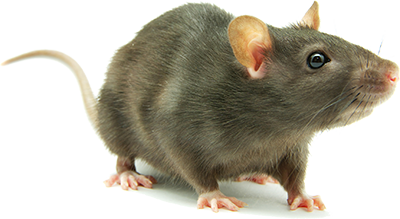
Rattus rattus                the roof or black rat
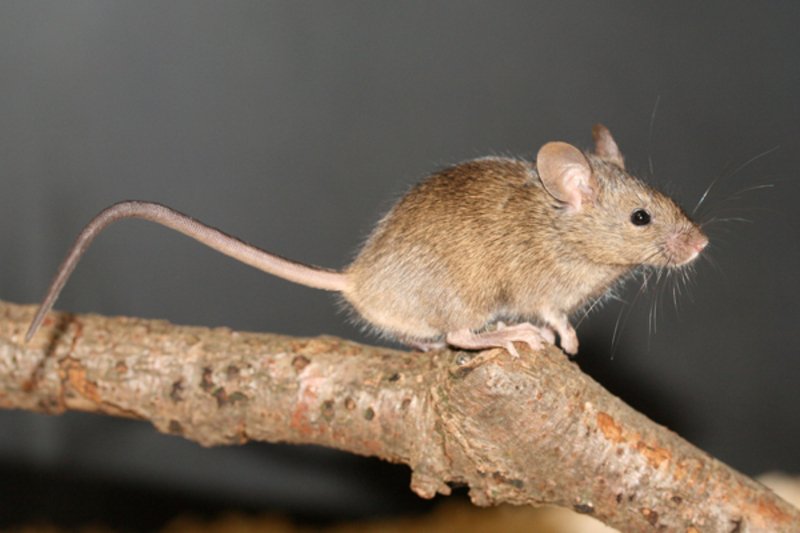
            Mus musculus              the house mouse.

It is the introduced rodents that cause problems in urban areas. 
These are known as commensal rodents – those that live with or near people and depend on humans for at least part of their food or shelter.  They are often attracted to houses for food and shelter as the weather cools in autumn/winter.

Pest Control WyongRodents prominent incisor teeth grow continuously.  ‘Rodent’ is derived from the Latin ‘rodere’ which means ‘to gnaw’.  Gnawing is a natural and necessary survival behaviour of the rat and mouse.  Rats and mice enjoy gnawing wires – a potential cause of fires in Wyong homes.

Rodents contaminate our environment with their urine and droppings and by spreading disease.  Rodents are known to be vectors of over fifty disease organisms including the causes of plague, leptospirosis, murine typhus and food poisoning.


COURTESY OF


Rodent species

SEWER RAT                        Rattus norvegicus                       
Originated in Central Asia.  Large, aggressive, adaptable and sly. 

ROOF RAT               Rattus rattus
A native of the forests of equatorial Southeast Asia.  It was the most common rat in urban areas in Europe during the outbreaks of plague.

HOUSE MOUSE      Mus musculus           
Believed to have originated in Central Asia.  Mice adapted to structures associated with the storage and transport of grain, with their provision of shelter, warmth and food. 


Sewer Rat
Roof Rat
House Mouse
Snout
Blunt
Pointed
Pointed
Ears
Small
Large
Large
Tail / body
Shorter 
Longer
Body-length
Droppings
18mm
Sausage-like
12mm Pointed
4mm
Pointed
Weight (g)
340 – 460
150 - 250
13 – 30
Intake /day (g)
15 – 30
10 - 20
2 – 4
Food preference
Garbage
Fruit, nuts
Grains
Offspring / year
20
20
40 – 60
Gestation (days)
22
23
18 – 21
Litter size
4 – 10
4 – 8
5 – 6
Lifespan (mths)
5 – 12
5 - 18
12 – 24
Home range (m)
8 – 30
8 – 30+
2 – 10

IT IS IMPORTANT TO CORRECTLY IDENTIFY THE SPECIES SO EFFECTIVE CONTROL PROGRAMMES CAN BE DESIGNED TO SUIT THE BEHAVIOUR PATTERNS OF THAT SPECIES.

ACCESS TO FOOD AND SHELTER, POOR HYGIENE, INCORRECT PLACEMENT OF TRAPS AND BAITS AND CHOICE OF INAPPROPRIATE ACTIVE AND FORMULATION OF BAITS WILL RESULT IN A SLOWER OR EVEN INEFFECTIVE CONTROL.


Brought to you by Proven Pest Control. Serving New South Wales as a guaranteed, trustworthy business and will eliminate your pests of concern at an affordable cost.

Wednesday, May 1, 2019

Rodent Control

Proven Pest Control

RODENTS

Most rodents are small animals with robust bodies, short limbs, and long tails. They use their sharp incisors to gnaw food, excavate burrows, and defend themselves.
Rodents have been used as food, for clothing, as pets, and as laboratory animals in research. Some species, in particular, the brown rat, the black rat, and the house mouse, are serious pests, eating and spoiling food stored by humans, and spreading diseases, and this is why it is important to call the professional at Proven Pest Control. We eliminate these pests for you.

The 3 pest rodents you need to be able to identify are:

Image result for rattus rattusRattus RattusRoof rat, black rat, fruit rat, tree rat etc. This rat is so common it has so many names! With a head and body length of 165-205mm, a tail length of 185-245mm and body weight of 95-340g. The tail is longer than the body which makes it easy to identify. It has relatively large eyes and ears and their colour ranges from black to light brown.
This species may have up to 6 litters of 5-10 per young
.
They are frequently found in domestic dwellings where residents may be alerted to its presence by scratching noises in the roof. It may nest inside wall insulation or in boxes.

Rattus norvegicusNorway rat, brown rat, sewer rat, lab rat etc. These sturdy rodents have a combined head and body length of 180-255mm, tail length of 150-215mm, and weight of 200-400g. This rat is stocky, with scruffy brown fur, small eyes, short ears and a very short and fat tail.
This species may have up to 5-6 litters per young annum.
They are dominant in Europe and America but has not yet managed to colonise much of Australia. However, very large infestations have been found in poultry farms a long way from any ports.

Related image
Mus domesticusHouse mouse. There is some confusion as to the exact species we have in Australia. House mice have a combined head and body length of 60-95mm, tail length of 75-95mm and weight of 10-20g. They have a slim body a pointed nose with quite large ears, and a fur colour of brown to grey.
They are “opportunistic” breeders, reaching sexual maturity at around 8 weeks old. They may produce 6-10 litters per young with 5-6 young per litter. The gestational period is around 19 days.
There creatures may live either indoors and outdoors, usually coming inside to avoid severe cold weather. Because of their small size, they can enter through almost any aperture. Experts say “if you can stick a pencil through a hole, then a mouse can". 
That is why Proven Pest Control is here!

 Proven Pest Control
Brought to you by Proven Pest Control. Serving New South Wales as a guaranteed, trustworthy business and will eliminate your pests of concern at an affordable cost.